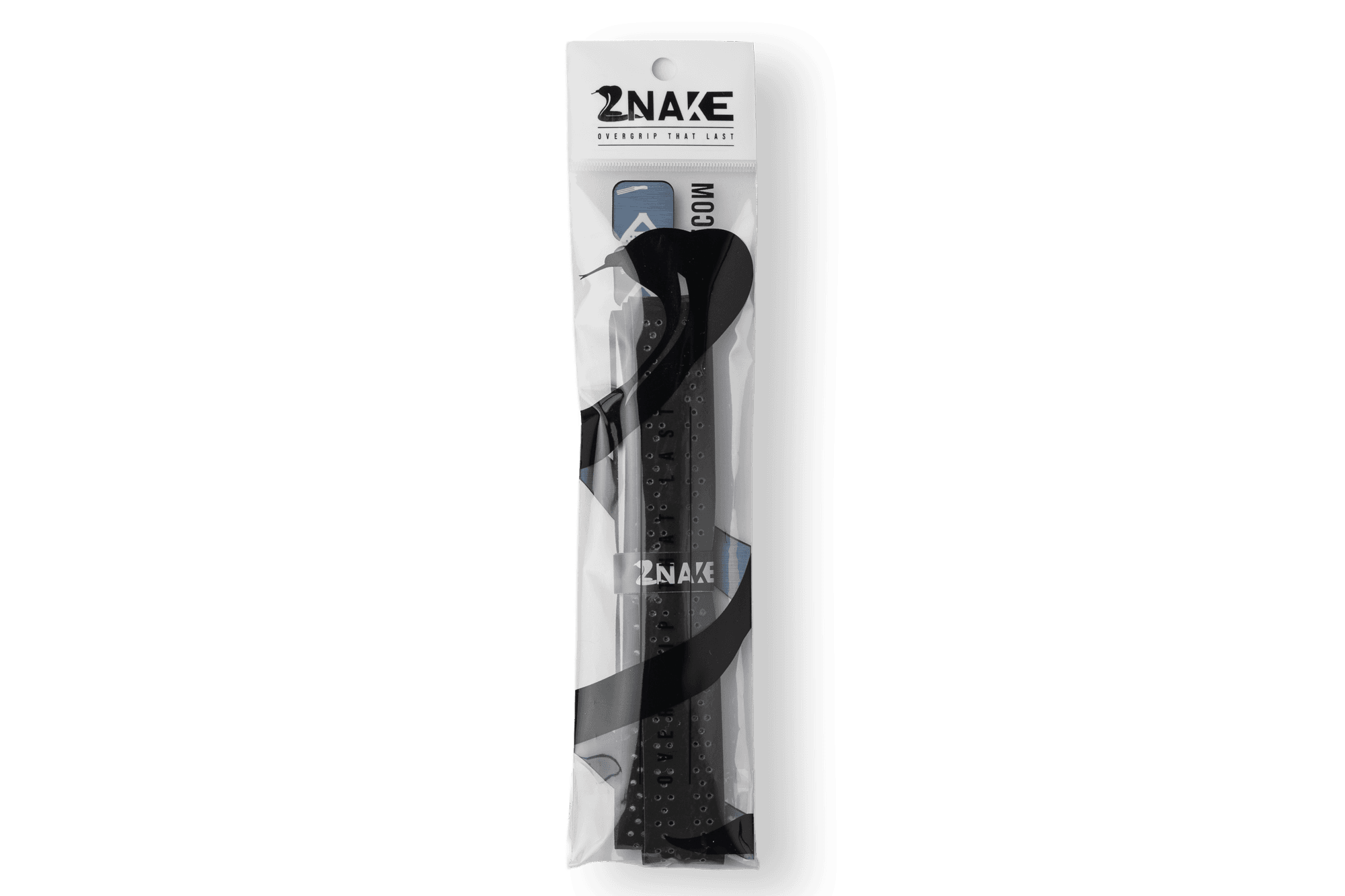
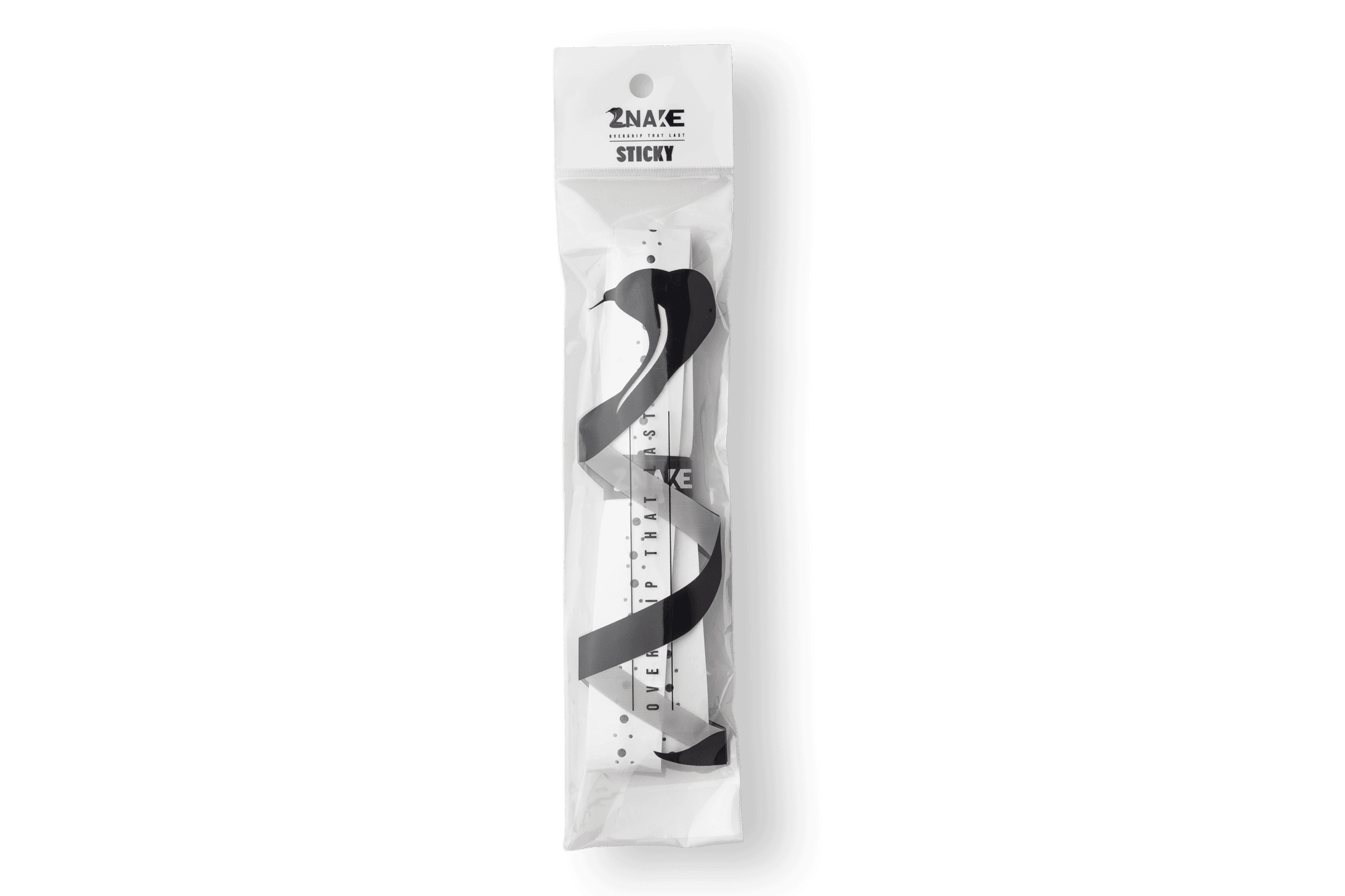
How to put on a padel overgrip – step by step
To put on a padel overgrip, start at the butt of the handle and wrap upward with even tension and 2–3 mm of overlap per turn until you reach the top of the handle, where you secure it with tape. On a Znake overgrip, the ridge faces down, against the handle. With a little practice it takes under a minute. Here are the steps, the most common mistakes and how to check that the wrap came out right.
Should the base grip stay on when you change your overgrip?
Yes. The base grip sits directly on the racket handle and is part of the racket. It is rarely replaced. The overgrip wraps on top of the base grip, is thinner and is made to be changed regularly.
So when you change, you only remove the old overgrip. Don't wrap a new one on top of an old one: an overgrip makes the grip roughly half a grip size thicker, and the worn surface of the old wrap makes an uneven base.
If you want the exact original thickness, you can remove the base grip and wrap with overgrip alone. Most players keep both layers for the cushioning.
How do you put on a padel overgrip?
You need the overgrip, the tape that comes with it and a pair of scissors if the wrap needs shortening. Lay the racket down so you can reach the whole handle and follow the steps in order.
- Remove the old overgrip. Start at the top, where the tape is, and unwind it around the handle. The base grip stays on.
- Peel off any protective film from the new overgrip.
- Turn the overgrip so the ridge faces down, against the handle. The raised edge then shows as a spiral on the outside of the grip.
- Start at the very bottom, at the butt of the handle, with the tapered end of the wrap angled upward. Hold the end in place with your thumb for the first few turns.
- Wrap upward toward the racket head with even tension and 2–3 mm of overlap per turn, or all the way up to the edge of the ridge if you prefer.
- Stop just below the top of the handle. Cut off the excess at an angle, so the end follows the angle of the wrap.
- Secure the end with the tape and press it down all the way round.
How much overlap and how much tension?
Overlap is a matter of taste. 2–3 mm per turn is the norm and gives an even surface. Many players overlap more, all the way up to the edge of the ridge. That uses more wrap per turn and makes the grip slightly thicker.
Tension decides the feel. Wrap tighter and the grip gets thinner and more direct; looser adds cushioning. Both work. What matters is that you wrap the same way every time, so the feel doesn't change from one overgrip to the next.
A padel handle is shorter than a tennis handle, so you won't use the whole wrap. Expect a piece left over to cut off.
How can you tell the wrap is right?
Run your hand along the grip. The thickness should feel even all the way, with no gaps where the base grip shows and no spots where the wrap sits double.
Check the edges. No edge should lift, neither at the butt nor under the tape. A loose edge catches on your hand and comes undone faster.
Look at the ridge. The raised edge should run as an even spiral with the same spacing all the way up. If it doesn't, the tension or the overlap has varied, and it is better to rewrap than to play on an uneven wrap.
What mistakes do most people make?
The most common one is wrapping the new overgrip on top of the old one. The grip gets thicker and the surface uneven. Always remove the old overgrip first.
The second most common is uneven tension. A wrap that is tight at the bottom and loose at the top feels different depending on where on the handle you hold it.
Other misses: leaving the protective film on, turning the wrap the wrong way so the ridge faces up, and wrapping past the top of the handle. Stop just below it, so the tape sticks to the handle.
When is it time to rewrap?
Playing two to three times a week, an overgrip lasts roughly two to four weeks. Change it when the surface feels slick, when the material has gone hard, or when you notice yourself squeezing harder to keep control. The last one is the clearest signal and often comes first.
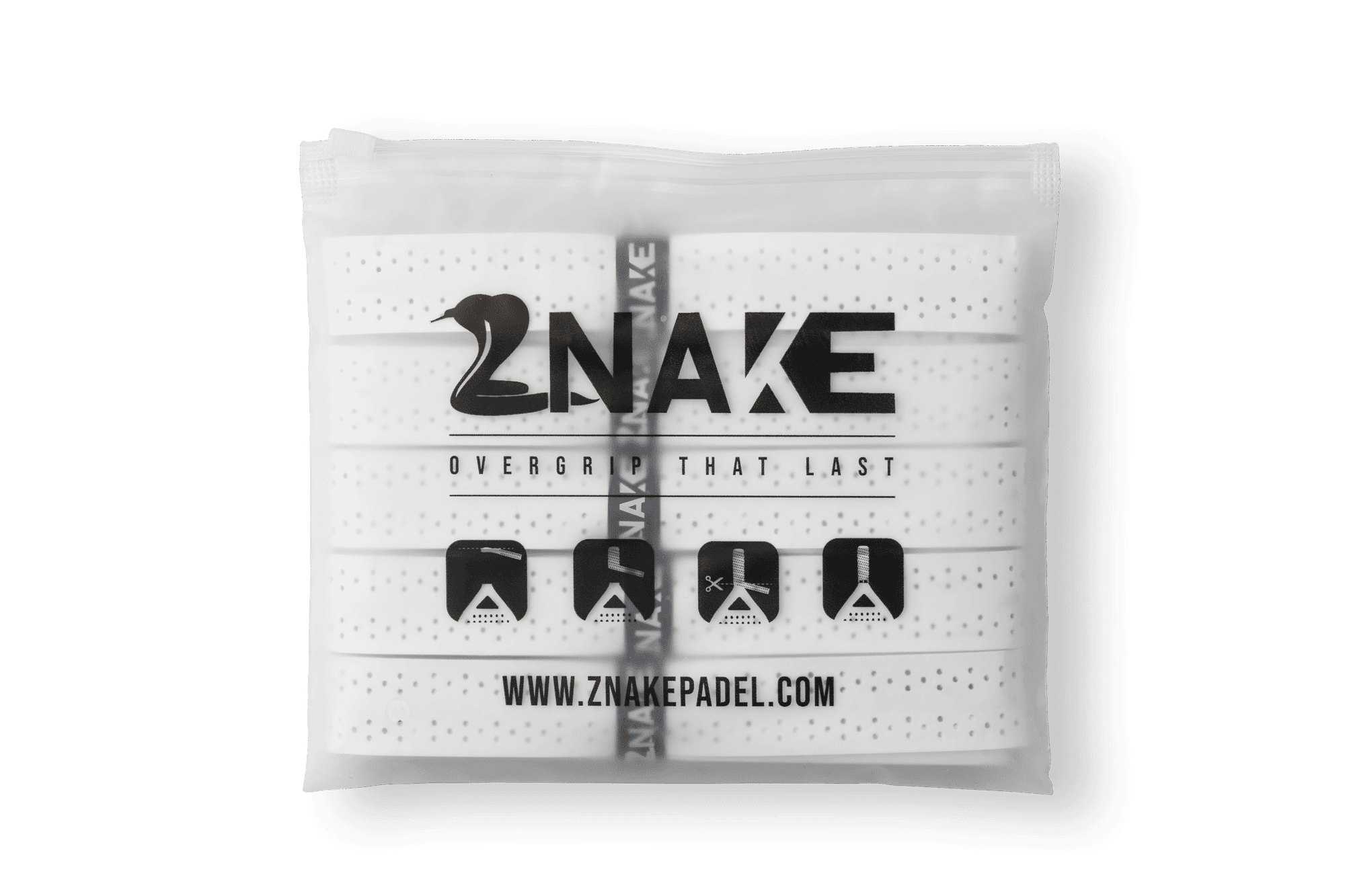
A Znake overgrip is made from a denser material than standard wraps and keeps its structure for its whole life, up to 3× longer before it needs replacing. If you play often, the 5-pack is practical: it comes with adhesive tape in a resealable zip-bag, so a fresh overgrip is always in your kit bag.
Frequently asked questions
Should the base grip stay on when you change the overgrip?
Yes. The base grip sits on the handle and is rarely replaced, while the overgrip wraps on top and is changed regularly. Only remove the old overgrip when you change.
Which side of the overgrip should face up?
On a Znake overgrip, the ridge faces down, against the handle. The raised edge then shows as a spiral on the outside and gives your hand an edge to lock against.
How much should an overgrip overlap?
2–3 mm per turn is normal. If you want more, you can overlap all the way up to the edge of the ridge. It's a matter of taste.
Does an overgrip make the grip thicker?
Yes, by roughly half a grip size. If you want to keep the original thickness, you can remove the base grip and wrap with overgrip alone.
How long does it take to put on a padel overgrip?
Under a minute once you've done it a few times. You need the overgrip, the tape that comes with it and scissors if the wrap needs shortening.
Can you put a tennis overgrip on a padel racket?
Yes, the technique and the material are the same. A tennis overgrip is longer because a tennis handle is longer, so on a padel racket there is more left over to cut off.
How often should you change a padel overgrip?
At two to three sessions a week, roughly every two to four weeks. Change it when the surface turns slick or hard, or when you notice you're squeezing harder.