Tennis Overgrip
Tennis players re-wrap more often than padel players, for a simple reason: longer handles, longer matches, more sweat per hour. That makes durability the deciding property rather than a bonus.
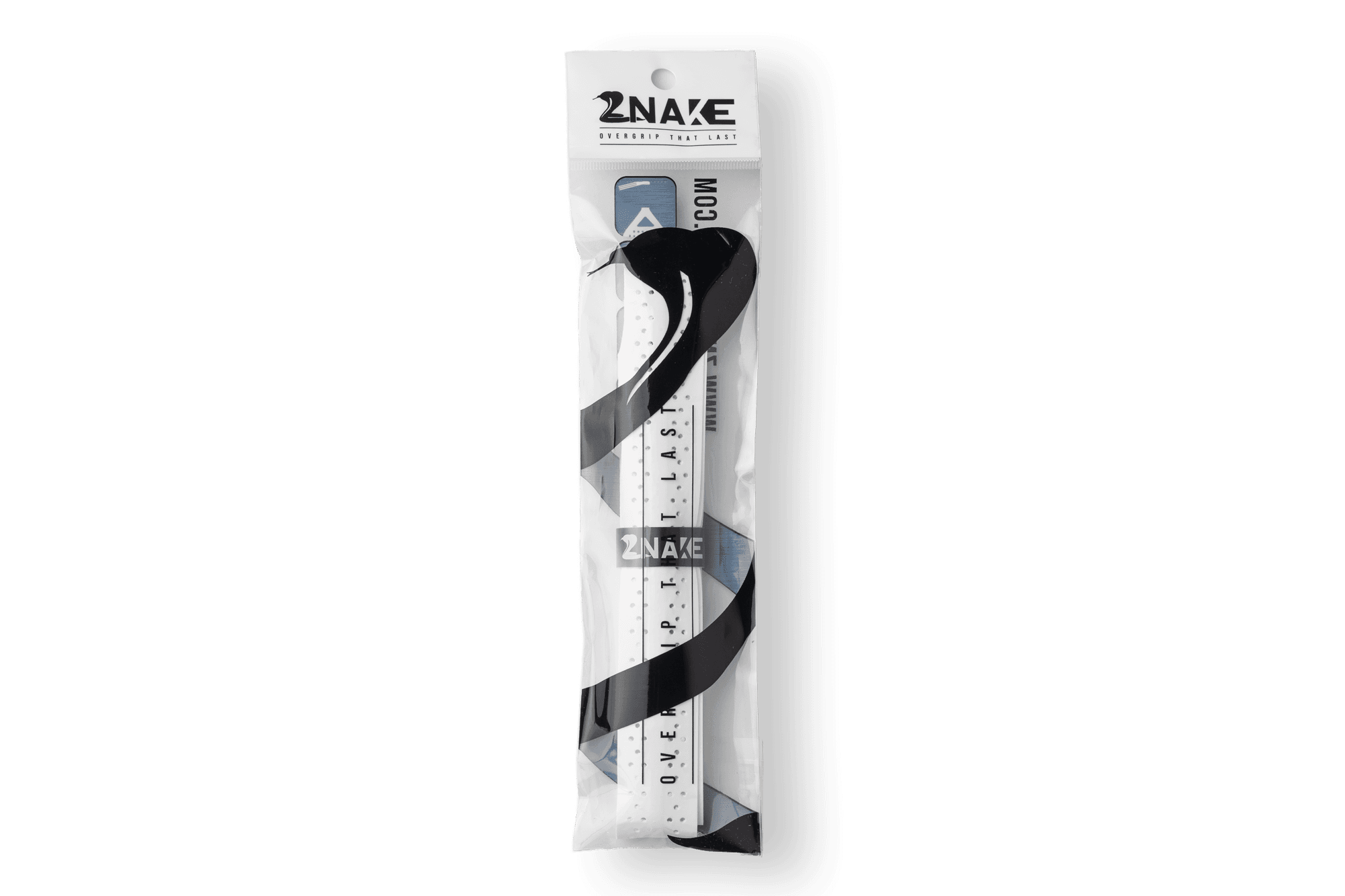
Znake Viper Tennis uses the same dense material as the padel line, cut to full handle length. It holds its structure across its whole life instead of turning slick after the first real session.
What to look for in a tennis wrap
The length has to reach
A tennis racket has a longer handle than a padel racket. A wrap made for padel won't cover it, and a join in the middle of the grip is immediately noticeable. Viper Tennis is cut for full length.
Absorption over tack
Outdoor tennis in heat demands absorption more than stickiness. A dry, ribbed surface moves moisture away better than a tacky wrap, which loses its hold once saturated.
Overlap when wrapping
About a third of overlap per turn gives even thickness without ridges. Wrapping tighter makes the grip thinner and more direct; looser adds cushioning. Either works — just stay consistent between changes so the feel doesn't shift.
Tennis grip questions
How often should you change a tennis overgrip?
Competitive players often change every match or every other match. Playing a couple of times a week, a wrap typically lasts two to three weeks. Feel decides it, not the calendar — once the surface is slick or hard, the wrap is done.
How do you wrap an overgrip correctly?
Start at the butt of the handle with the tapered end angled upward. Wrap toward the racket head with about a third of overlap per turn and even tension. Finish just below the end of the handle and secure it with the tape supplied.
Can you use a padel grip on a tennis racket?
The material works, but the length makes it impractical — a padel wrap won't cover the longer tennis handle, leaving a join you can feel. Use the tennis version instead.