Grip tape or regular tape on your floorball stick – what's the difference?
Floorball grip tape is the thin grip wrapped around the shaft of the stick for your hands to hold – most players simply call it tape. Ordinary tape is something else: it secures the end of the grip, but it is not made to be held. Here we sort out the terms, what separates a grip from a roll of tape, what the piece of tape in the pack is for and how to choose a grip for your stick.
Is floorball tape the same as a grip?
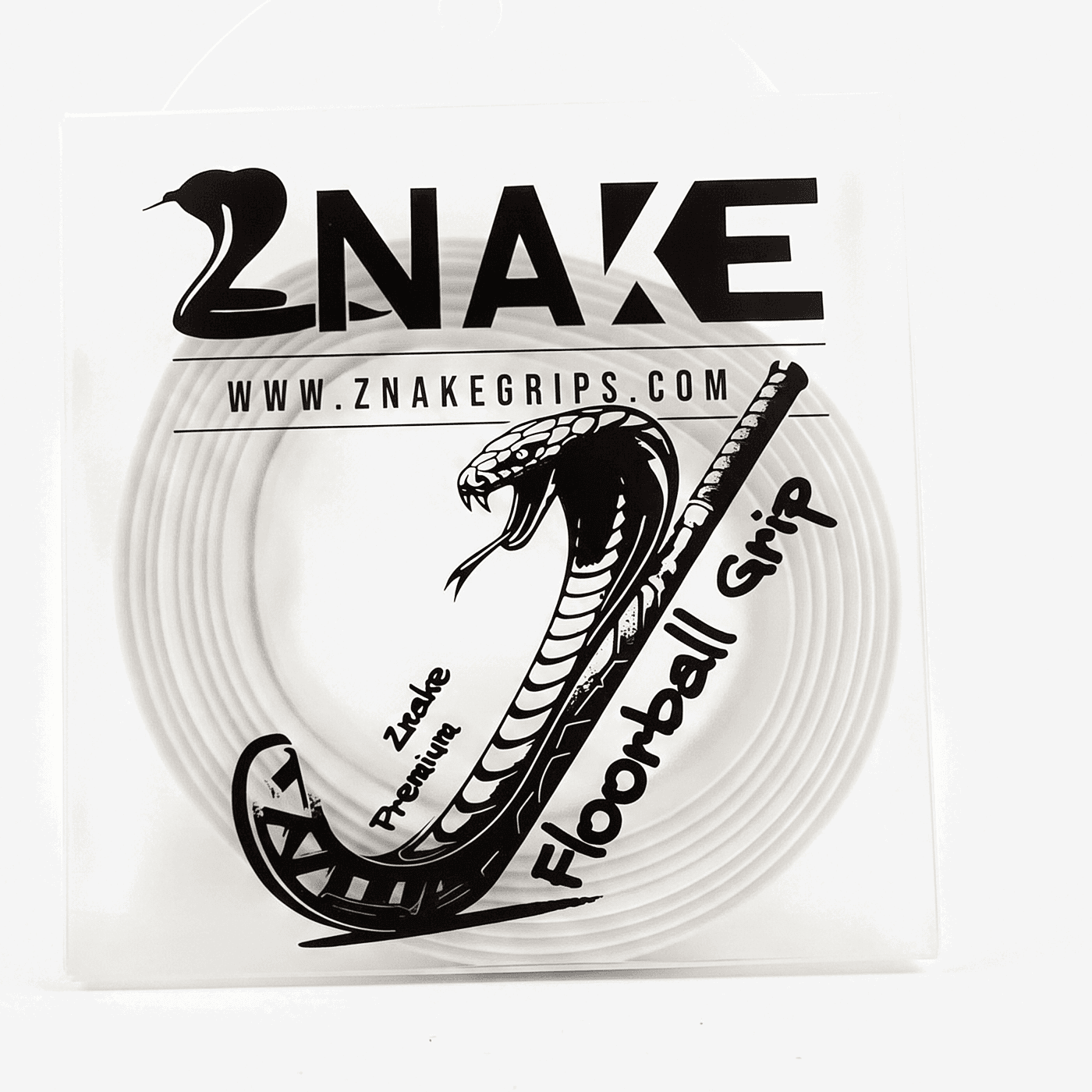
Usually, yes. In floorball the grip is often just called tape or grip tape, and it is the same product: a strip wrapped in a spiral round the shaft for your hands to hold. Znake Boa is sold as floorball grip tape, and it is a grip.
The word tape is also used for something else: the short piece of tape that comes with the grip. It secures the end of the grip on the shaft so it does not come loose. It is not part of the grip itself.
So when someone says their stick needs new tape, they almost always mean the grip. That is what wears out, and that is what you replace.
What is the difference between a grip and ordinary tape?
A grip is made for your hands. It has a thickness, a material and a surface that should feel the same every time you take hold, and it has to stand up to your hands wearing on it game after game.
Ordinary tape is made to fasten and hold things together. It lacks the thickness and texture of a grip, which is why it is used to secure the grip – not as the grip.
Znake Boa is 1.5 mm thin and made from a denser material. The texture stays put through the season instead of going smooth after a few sessions.
What is the tape supplied with the grip for?
For securing the end of the grip. You wrap from the top end of the stick downwards with even tension and 2–3 mm of overlap, and finish where your lower hand normally sits. Cut the grip off there and secure the end with the tape.
The tape holds the last turn in place. A loose end starts to lift, and then the grip comes undone from the bottom. The full wrap, step by step, is in the Znake guide on regripping a floorball stick.
- Wrap from the top end of the stick downwards with even tension and 2–3 mm of overlap.
- Stop where your lower hand normally sits.
- Cut the grip off at an angle, so the end follows the angle of the wrap.
- Wrap the supplied tape round the end of the grip.
- Press the tape down all the way round.
How do you choose a grip for your floorball stick?
Start with tackiness. A very tacky grip locks the hand in place, which works against the quick grip changes floorball is built on. Boa is deliberately less sticky than the Znake Sticky line for exactly that reason.
Then look at the material. A denser material keeps its texture longer and copes with your hands wearing it unevenly. Boa uses the same dense material as Znake racket grips, sized for stick shafts.
Finally, thickness. Boa has a 1.5 mm profile, thin enough to keep close contact with the stick without sacrificing comfort.
In short: choose a grip that is thin, dense and only moderately tacky, long enough for the whole shaft, and secure it with the tape supplied.
Why do the upper and lower hands wear the grip differently?
In floorball you hold the stick with both hands, and each hand wears the grip in its own way. The upper hand stays put and wears the same spot. The lower hand slides along the shaft when you change grip position.
That is why many players wrap tighter at the top and looser lower down. A denser material handles that uneven load better, and it is also why wear always shows first where the upper hand sits.
How much grip does a floorball stick need?
Floorball sticks are cut to the player's height, so how much grip you use varies more than in racket sports. Most senior sticks need more grip than a tennis racket. Measure the shaft before you order.
Znake Boa measures 1800 × 27 mm and covers the entire shaft of a floorball stick. So you do not need to join two grips to reach all the way down to your lower hand.
When should you replace the tape on your floorball stick?
Most players change their grip once or twice a season. Change it sooner if the surface has gone shiny where your upper hand sits – that is where wear shows first.
When you change the grip, change the tape at the end at the same time. A new grip comes with its own piece of tape, so you do not need any extra.
Between changes, just keep an eye on the surface where your upper hand sits. As long as the texture is still there, the grip is doing its job, and once it has gone shiny it is time.
Frequently asked questions
Is floorball grip tape the same as a grip?
Usually, yes. In floorball the grip is often just called tape or grip tape. Ordinary tape is only used to secure the end of the grip.
Can you use ordinary tape as a grip on a floorball stick?
Ordinary tape is made to fasten, not to be held. It lacks the thickness and texture of a grip, so a grip is used for the grip itself.
What is the tape supplied with the grip for?
It secures the end of the grip where your lower hand normally sits, so the grip does not come loose from the bottom.
How tacky should a floorball grip be?
Not too tacky. A very tacky grip locks the hand in place and works against the quick grip changes in floorball.
How long and thick is Boa?
Znake Boa measures 1800 × 27 mm and is 1.5 mm thick. It covers the entire shaft of a floorball stick.
How often should you change the grip tape on a floorball stick?
Most players change their grip once or twice a season. Change it sooner if the surface has gone shiny where your upper hand sits.
Products in this guide
More guides
- How to put on a padel overgrip – step by stepHow to put on a padel overgrip: start at the butt, ridge facing down, 2–3 mm overlap and even tension. Done in under a minute.
- Tacky vs dry padel overgrip – which one suits you?Tacky, dry, ribbed or smooth? How to choose a padel overgrip for sweat, feel and playing style – and how to tell when it is worn out.
- How to put on a tennis overgrip – step by stepHow to put on a tennis overgrip: start at the butt, ridge facing down, 2–3 mm overlap and even tension. Plus base grip vs overgrip and when to change.