How to hold a padel racket: the continental grip step by step
You hold a padel racket with the continental grip: the edge of the frame pointing forward, your hand around the handle as if you were holding a hammer, right at the bottom of the handle. It is the basic grip in padel, and the same grip is used for the forehand, the backhand and the volley. The rest comes down to two things: holding lightly between shots, and having an overgrip that lets you do that. This guide walks through the hold step by step, what your free hand does, and how the overgrip affects how hard you need to hold.
How do you hold a padel racket?
The continental grip is the basic grip in padel. It is a single grip used for the forehand, the backhand and the volley, so your hand sits in the same place whichever shot comes next.
The phrase padel grip is used for two things. One is the hold: how your hand holds the racket. The other is the wrap around the handle. This guide is about the hold, but the two belong together: the wrap is the surface your hand is actually holding.
How do you find the continental grip?
You find the continental grip by holding the racket with the edge of the frame pointing forward and gripping the handle like a hammer. Do it this way the first time, and every time you are unsure whether your hand has ended up in the right place.
- Take the racket by the neck with your free hand and hold it so the edge of the frame points forward.
- Grip the handle with your playing hand the same way you would grip a hammer.
- Slide your hand down until it sits at the very bottom of the handle.
- Let go with your free hand and hold the handle lightly.
How firmly should you hold a padel racket?
Hold the handle lightly between shots. The racket should stay in your hand without you squeezing.
This is where the overgrip does part of the work. A padel overgrip should hold firm without you having to squeeze harder.
If you notice yourself squeezing harder to keep control, look at the overgrip. It is the clearest signal that the wrap is worn, and it usually arrives before the surface feels slick or the material has gone hard.
What does your free hand do?
Your free hand belongs on the neck of the racket whenever you change or adjust your grip. It holds the racket so your playing hand can move.
Use it when your hand has slipped on the handle: take the neck with your free hand, check that the edge of the frame points forward, and let your playing hand find its way back to the bottom of the handle. It is the same movement as when you find the grip for the first time.
Which overgrip makes the right hold easier?
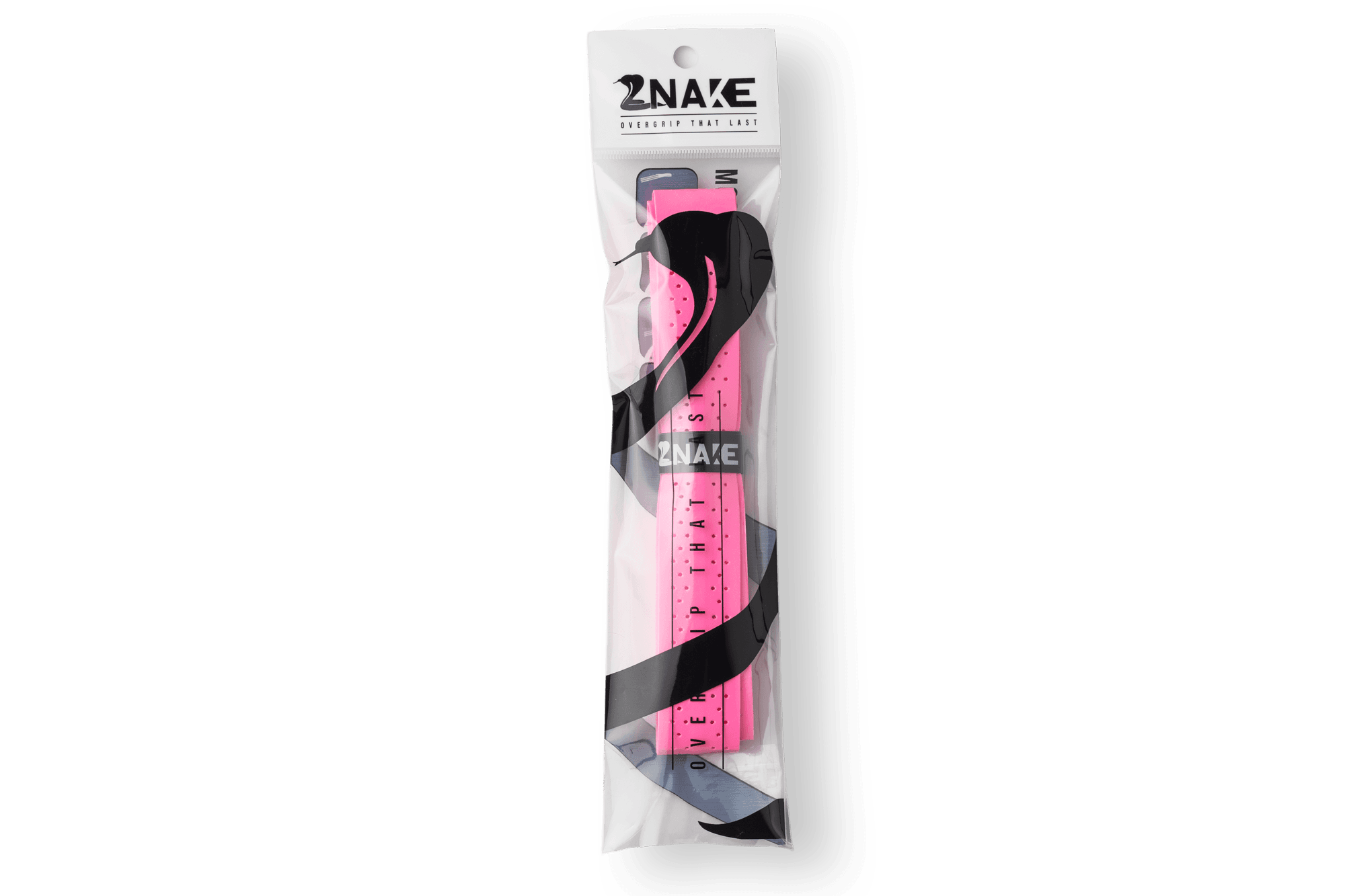
A ribbed overgrip gives your hand a defined edge to lock against. Viper is Znake's ribbed all-round overgrip: an EVA strip down the centre creates a raised ridge for extra grip and control, and the surface is perforated.
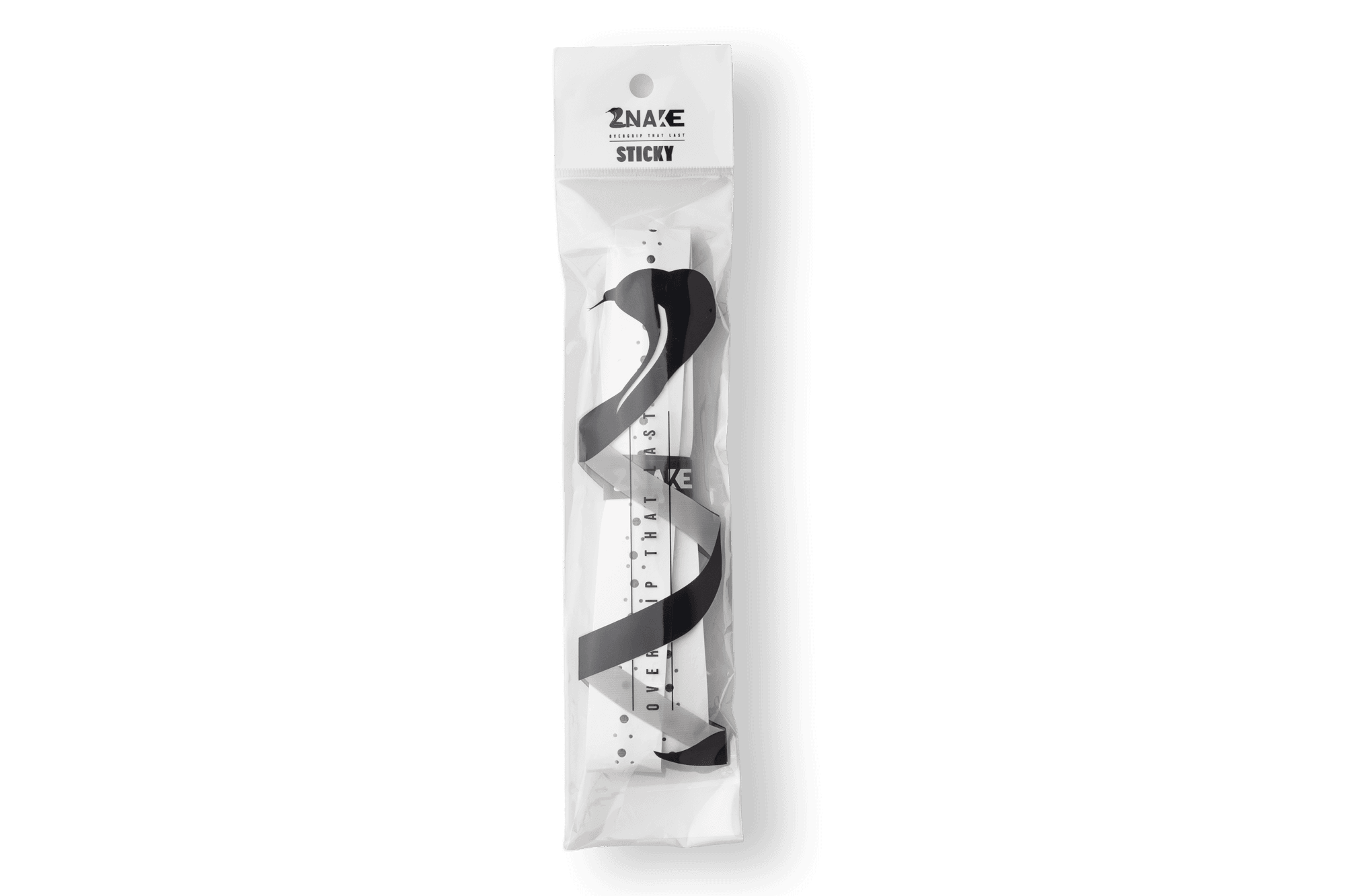
A sticky overgrip grabs immediately and needs less hand pressure. Viper Sticky has a sticky face that locks your hand to the grip and wicks moisture without losing the tacky feel. It suits you if you want to hold lightly and still feel that the racket stays put.
Both fit all padel rackets. Expect the handle to get slightly thicker with an overgrip, around half a grip size. Feel is personal and the models differ more than you'd expect, so starting with a 1-pack is sensible.
When is it the overgrip, not your hold, that needs changing?
Change the overgrip when the surface feels slick, when the material has gone hard, or when you notice yourself squeezing harder to keep control.
Playing two or three times a week, a wrap lasts roughly two to four weeks. A Znake overgrip is made from a denser material than standard wraps and keeps its structure across its whole life, up to 3× longer before it needs replacing.
Make a habit of checking in the same order: first the hand (edge of the frame forward, gripped like a hammer, bottom of the handle), then the wrap (slick, hard or worn).
Frequently asked questions
How do you hold a padel racket?
With the continental grip: hold the racket with the edge of the frame pointing forward, grip the handle like a hammer and slide your hand down until it sits at the bottom of the handle.
What is the continental grip in padel?
The continental grip is the basic grip in padel. The same grip is used for the forehand, the backhand and the volley.
Do you change grip between forehand and backhand in padel?
No. The continental grip is used for the forehand, the backhand and the volley.
How firmly should you hold a padel racket?
Lightly between shots. If you notice yourself squeezing harder to keep control, it is a sign that the overgrip is worn.
Where on the handle should your hand sit?
At the very bottom of the handle. Grip the handle like a hammer and slide your hand down.
What do you do with your free hand in padel?
Put it on the neck of the racket when you change or adjust your grip.
Which overgrip helps you hold the racket lightly?
A sticky overgrip such as Viper Sticky grabs immediately and needs less hand pressure. A ribbed overgrip such as Viper gives your hand a defined edge to lock against.
Does an overgrip make the handle thicker?
Yes, but only slightly, around half a grip size.
More guides
- How to put on a padel overgrip – step by stepHow to put on a padel overgrip: start at the butt, ridge facing down, 2–3 mm overlap and even tension. Done in under a minute.
- Tacky vs dry padel overgrip – which one suits you?Tacky, dry, ribbed or smooth? How to choose a padel overgrip for sweat, feel and playing style – and how to tell when it is worn out.
- How to put on a tennis overgrip – step by stepHow to put on a tennis overgrip: start at the butt, ridge facing down, 2–3 mm overlap and even tension. Plus base grip vs overgrip and when to change.