Padel racket protector – do you need one and how do you fit it?
You need a padel racket protector if you play close to the walls: it sits on the top edge of the racket and takes the wear from glass, mesh walls and the floor instead of the carbon. Znake Carbon 3K weighs 5 grams, is 0.35 mm thin and goes on in a few minutes, with no heat needed. Here is what a frame protector does and does not do, how it affects the feel and how to fit it.
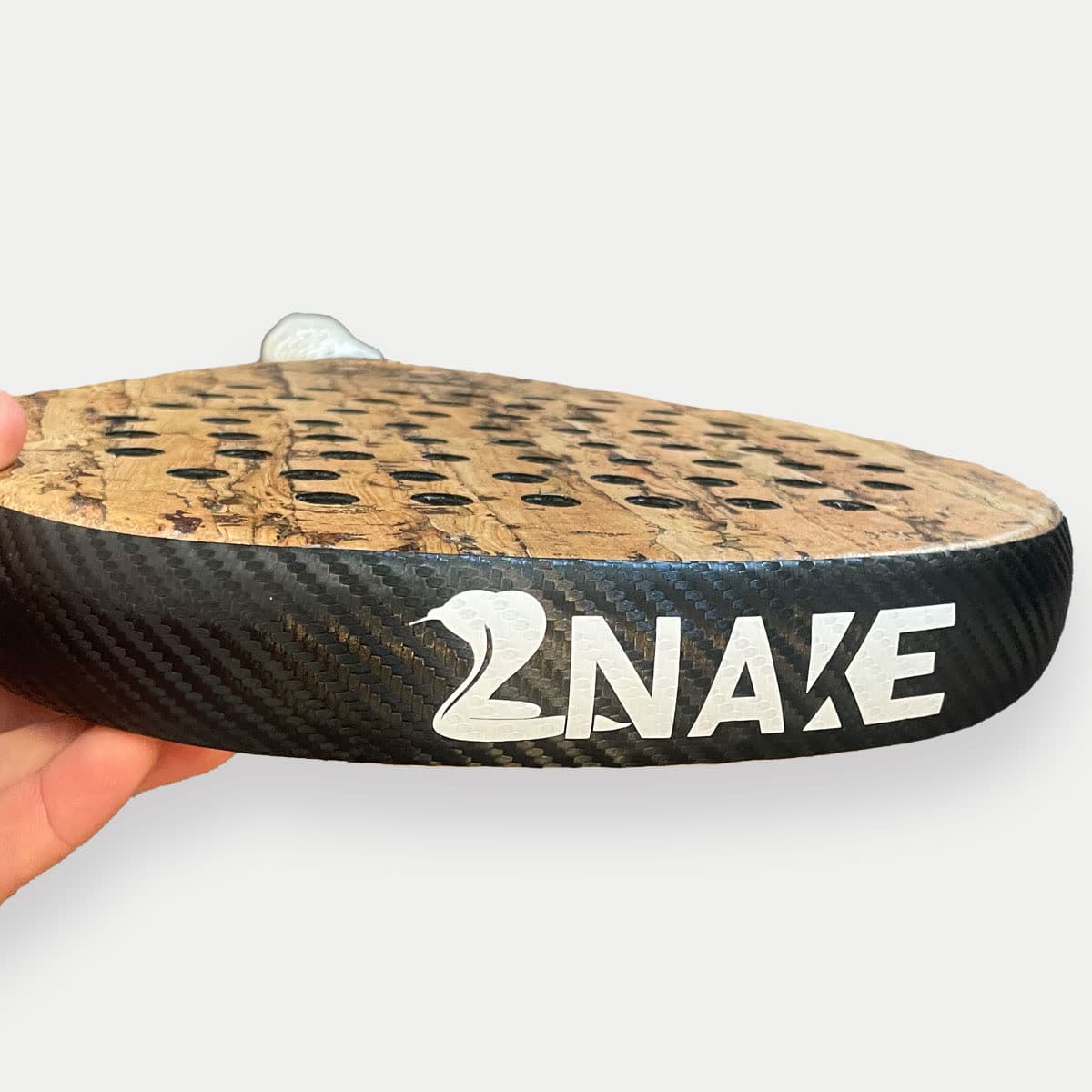
Does a padel racket need a frame protector?
If you play off the walls, it does. Almost all damage to a padel racket sits on the top edge and comes from glass, mesh walls or the floor on low balls. A frame protector takes that wear instead of the carbon.
What a frame protector does is protect the edge against scratches and wear. It is no promise that the racket can take any knock – a hard hit against the wall can still damage the frame. Think of it as a protective film for the edge, not as a hard shell.
The protector is a consumable, just like the overgrip, but considerably cheaper than the frame repair it can replace.
Who can do without a frame protector?
Wear follows the way you play. If you rarely take balls close to the glass and the mesh, and rarely scrape the racket along the floor on low balls, the top edge wears slowly and the need is smaller.
If you often play in the corners, defend close to the wall or dig out low balls along the floor, on the other hand, the frame takes a beating every session. That is where a frame protector does the most good.
Does a protector change how the racket feels?
Very little. Znake Carbon 3K weighs 5 grams and is 0.35 mm thick. The balance point shifts marginally upward – less than the difference between a dry and a sweat-soaked overgrip.
Thicker rubber guards are a different matter and are clearly noticeable. That is why Carbon 3K is made from carbon fibre: the same premium material used in high-end rackets, in a thin layer with a self-adhesive backing.
How do you fit a frame protector?
It takes a few minutes, and you do not need any heat. Take your time and follow the steps in order, and the result will be even.
- Clean the top edge of the frame and let it dry completely.
- Line the protector up in the middle of the top edge before you peel off the backing paper, so you can see exactly where it will sit.
- Peel off the backing paper a little at a time instead of all at once.
- Press the protector down from the middle out to the sides.
- Smooth out any bubbles right away.
What mistakes do most people make?
The most common one is peeling off all of the backing paper at once. The protector then sticks before it is in place and easily ends up crooked. Line it up first and peel the paper off a little at a time.
The second most common is fitting the protector on a frame that is not clean and dry. Clean the top edge first, so the protector sits evenly.
A third mistake is starting to press it down at one end. Start in the middle and work your way out, so the protector stays in the middle and the bubbles are pushed out to the sides.
How long does a frame protector last?
Until it is worn through. For an active player that is usually half a season to a full season, depending on how often the racket meets the wall and the floor.
Replace it when the protector is worn through. At that point it is no longer the protector taking the wear, but the frame.
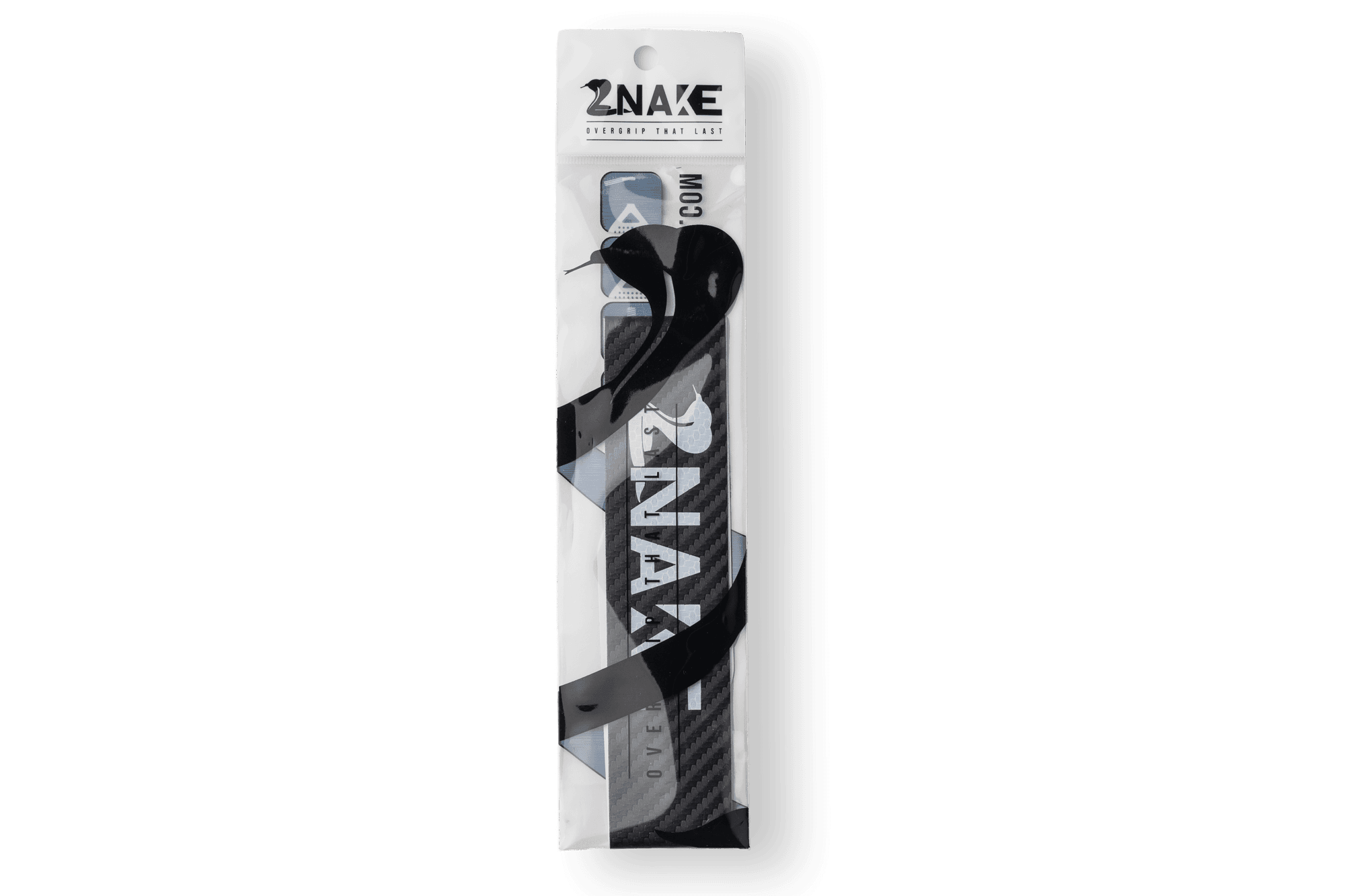
Znake Carbon 3K measures 370 × 35 mm and sticks straight onto the frame, so a new protector is in place within a few minutes.
Frequently asked questions
Do you need a padel racket protector?
If you play off the walls, yes. The damage usually sits on the top edge and comes from glass, mesh walls and the floor – the protector takes the wear instead of the carbon.
Does a frame protector affect the racket's balance?
Marginally. Znake Carbon 3K weighs 5 grams and is 0.35 mm thick, so the balance point only moves slightly upward. Thicker rubber guards are more noticeable.
How much does a padel racket protector weigh?
Znake Carbon 3K weighs 5 grams.
How do you put a protector on a padel racket?
Clean the frame, line the protector up in the middle of the top edge, peel off the backing paper a little at a time and press it down from the middle outward. No heat needed.
How long does a frame protector last?
Half a season to a full season for an active player. Replace it when it is worn through.
Does a frame protector prevent cracks?
It protects the edge against wear and scratches from walls and floor. A hard hit can still damage the frame, so think of the protector as protection for the edge, not a guarantee.
Products in this guide
More guides
- How to put on a padel overgrip – step by stepHow to put on a padel overgrip: start at the butt, ridge facing down, 2–3 mm overlap and even tension. Done in under a minute.
- Tacky vs dry padel overgrip – which one suits you?Tacky, dry, ribbed or smooth? How to choose a padel overgrip for sweat, feel and playing style – and how to tell when it is worn out.
- How to put on a tennis overgrip – step by stepHow to put on a tennis overgrip: start at the butt, ridge facing down, 2–3 mm overlap and even tension. Plus base grip vs overgrip and when to change.